Understanding Cork Spray Insulation
What is Cork Spray
Insulation?
A natural, spray-applied coating made from cork granules — breathable, flexible, and designed to improve comfort in Irish homes and buildings.
Cork. Spray-Applied. That Simple.
Cork spray insulation is exactly what it sounds like — natural cork granules mixed with acrylic resins to form a thick, workable coating that is sprayed onto walls using a machine. When it sets, it forms a flexible, breathable layer that insulates, protects and finishes the surface in one go.
The cork itself comes from the bark of cork oak trees, which grow primarily in Portugal and Spain. The bark is harvested by hand without cutting the tree down — it grows back and can be harvested again every nine years. It is one of the most sustainable building materials available.
Unlike traditional insulation boards or render systems, cork spray requires no adhesives, no fixings, and no specialist framing. It bonds directly to the existing wall surface and takes far less time to apply.

Cork bark is harvested by hand — the tree is never cut down.
Cork Spray vs Traditional Insulation
Most people are familiar with rigid insulation boards fixed to walls, or external insulation systems with render over the top. Cork spray works differently — and that difference matters.
VIPEQ Cork Spray
- Sprayed directly onto the existing wall
- Thin build-up — typically under 15mm
- Breathable — moisture can still move through the wall
- Flexible — moves with the building without cracking
- No fixings, framing, or adhesive required
- Works on curved walls, reveals and awkward shapes
- Thermal improvement and fresh finish in one coat
- Minimal disruption — no major works
Traditional Board Insulation
- Rigid boards fixed or bonded to the wall
- Significant build-up (50–150mm typical)
- Often not breathable — can trap moisture
- Rigid — movement can cause cracking at joints
- Requires fixings, track or specialist framing
- Difficult or impossible on curved or complex shapes
- Requires additional render or plasterboard finish
- Significant disruption — windows and fittings affected
Spray-Applied by a Trained Contractor
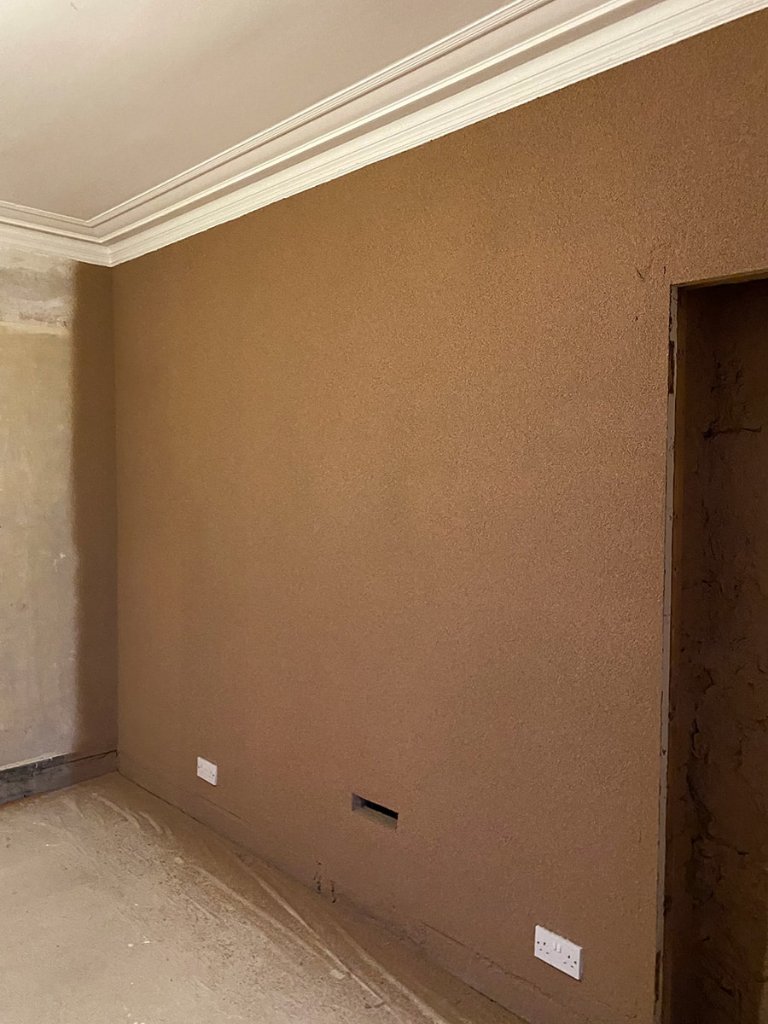
The process is straightforward. A certified VIPEQ contractor visits the property, assesses the substrate, and prepares the surface — cleaning, priming where needed, and masking off any areas not to be coated.
Surface Assessment
The wall is inspected for damp, cracks or loose material. Any underlying issues are addressed first.
Priming
A bonding primer is applied to ensure the cork coating adheres correctly to the substrate.
Cork Spray Application
The cork coating is sprayed on using a specialist machine, building up in layers to the required thickness.
Finished Surface
Once set, the surface is ready — textured, breathable, protected and finished. It can be painted over if required.
The Issues Cork Spray Addresses
Most people come to cork spray insulation because they have a specific problem that other systems have not solved. Here are the most common ones.
Cold Internal Walls
Many Irish homes — especially those built before the 1980s — have solid walls with little or no insulation. Rooms feel cold even with the heating on. Cork spray raises the surface temperature of the wall, making rooms feel noticeably warmer.
Condensation & Mould
When warm air inside a home meets a cold wall surface, moisture condenses. Over time this leads to damp patches and mould growth. By warming the wall, cork spray reduces the risk of this happening.
Cracked or Weathered Render
Exterior render on Irish homes takes a battering from rain and wind. When it starts to crack, water gets in and the problem worsens. Cork spray's flexibility means it bridges minor cracks and protects the underlying wall.
Façade Deterioration
Painted masonry that is peeling, stained or aged. Cork spray restores the appearance in one application while adding a protective, breathable layer that standard paint cannot provide.
Built for Ireland's Climate and Building Stock
Ireland has a specific combination of challenges that makes cork spray particularly relevant. High rainfall, wind-driven rain on exposed façades, and a large stock of pre-1970s solid-wall housing all create problems that generic European products are not designed for.
Irish heritage guidance also stresses that materials used on traditional walls must be vapour-permeable — trapping moisture inside a solid wall can cause serious long-term damage. Because cork is naturally breathable, it works safely on the type of older properties that make up a large share of Irish housing stock.
For modern buildings, retrofit projects, agricultural buildings and commercial properties, cork spray offers a fast, practical and durable solution that reduces the need for disruptive, expensive works.
Why Cork Spray Works
Breathable
Cork is naturally vapour-permeable, allowing moisture to pass through the wall without getting trapped. This is critical for older Irish homes built with stone or solid masonry.
Flexible & Crack-Resistant
Cork absorbs building movement and recovers 95% of its original shape. This means the coating moves with the building, preventing hairline cracks from forming over time.
Reduces Heat Loss
The coating acts as a thermal barrier on the wall surface, raising the internal temperature and reducing the cold wall effect — one of the biggest comfort issues in Irish homes.
Reduces Condensation
By warming the wall surface, cork spray reduces the conditions that cause condensation to form. This in turn helps prevent recurring mould in problem rooms.
Thin Application
Applied in a thin layer (typically under 15mm), there is no significant loss of room space and no need for major alterations to windows, skirting boards or fittings.
Renews Tired Façades
Beyond the thermal benefits, the coating gives a fresh, clean finish to weathered or damaged exterior walls — practical and aesthetic in one application.
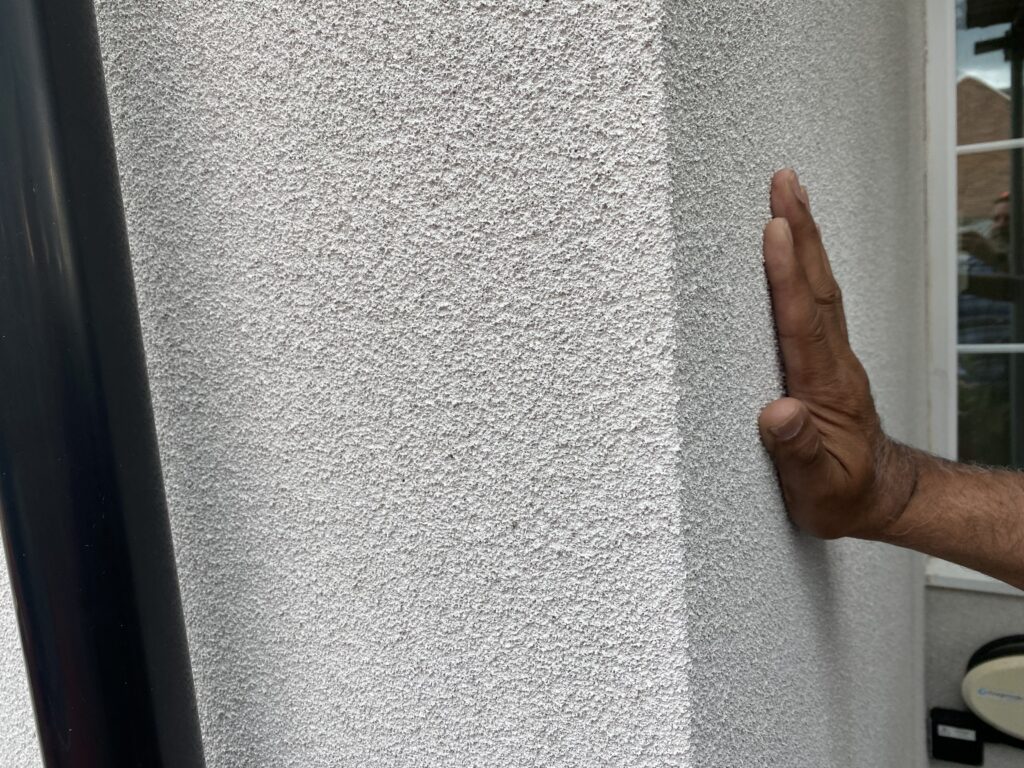
VIPEQ Thermal Corkspray — close-up texture finish
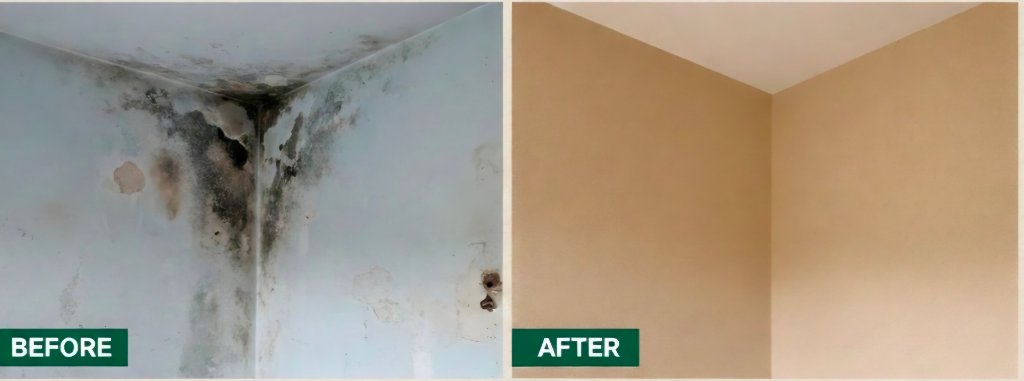
Applied to external wall — before and after
Cork Spray Is Versatile
It is not limited to house walls. Cork spray can be used across a wide range of building types and surfaces.
What Makes Cork Unique as a Material?
Cork is made up of millions of tiny air-filled cells. In fact, around 98% of its mass is air — which is what gives it its insulating and acoustic properties. Each cell acts like a tiny cushion, compressing under pressure and returning to its original shape when the pressure is removed.
This is why cork is flexible. It is also why it is breathable — moisture can pass through the cellular structure without the material absorbing or retaining it. And unlike synthetic insulation materials, cork is fully natural and biodegradable.
The VIPEQ formulation combines these cork granules with high-quality acrylic resins and additives that enhance adhesion, durability and weatherproofing — giving a product that performs across a wide range of substrates and Irish conditions.
98%
Air by mass — natural insulator
95%
Shape recovery — fully flexible
9 yrs
Cork bark regeneration cycle
Cork Properties at a Glance
Think Cork Spray Might Be Right for You?
Send us photos of your wall, roof or building and we will advise on the best VIPEQ system for your situation — no obligation, no hard sell.